
Payment Orchestration: Still the Holy Grail for Merchants?
)
What PLS EU Revealed About Payment Orchestration
The Orchestration Maturity Spectrum
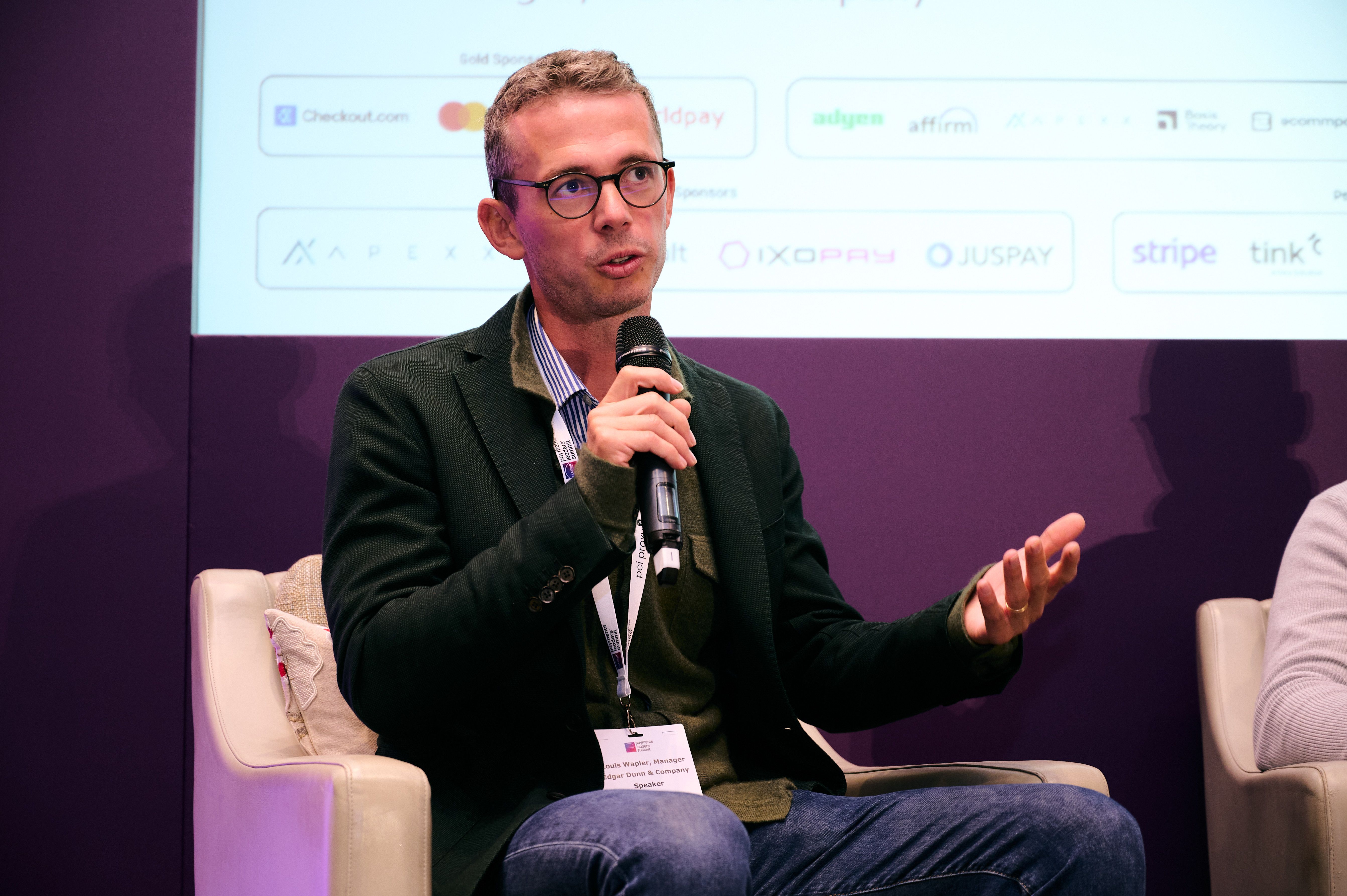
Senior payment executives from across Europe's leading merchants gathered at this year's Payment Leaders' Summit in Amsterdam, and one topic dominated virtually every conversation: Payment Orchestration. What surprised Louis most was not just the prevalence of the topic – despite five orchestration providers sponsoring the event – but the dramatic variation in merchant understanding, maturity, and motivation for pursuing orchestration solutions.
The merchant landscape at PLS revealed three distinct categories of orchestration readiness, each presenting unique challenges and opportunities.
The Travel Veterans
OTAs and established travel merchants demonstrated the deepest understanding of payment orchestration. For these players, payments represented a direct revenue stream (kickback achieved via the BSP card channel), not just a checkout necessity. Their sophisticated grasp of routing logic, authorisation rates, and cost optimisation reflected years of treating payments as a strategic differentiator. These merchants did not need convincing about orchestration value; they were actually seeking validation of their existing strategies and exploring advanced optimisation techniques.
The In-House Pioneers
Perhaps the most intriguing group were merchants who had built proprietary orchestration solutions years before commercial platforms emerged. During the roundtables, one merchant candidly admitted their homegrown system had become a burden:
"Integration costs are significant, agility is compromised, but we have invested too much and have too many FTEs involved to pivot now."
This highlighted a critical challenge: early movers who correctly identified orchestration benefits but were now trapped by their own success.
The Searching Majority
The largest segment included merchants from diverse sectors: clothing retail, online trading, e-commerce food distribution. For those, orchestration remained either an abstract concept or a potential solution they were actively evaluating. Many were deep in RFP processes but struggling with ROI justification. The fundamental question persisted:
Is the investment worth the promised returns?
The ROI Drivers: Beyond the Smart Routing Promise
What became clear through multiple panel discussions and roundtable sessions was that merchant motivations for orchestration varied significantly, and understanding these drivers was necessary for successful implementation.
-
Scalability emerged as the primary concern for rapidly growing merchants. The ability to add new payment methods and markets without extensive technical integration appealed to companies expanding internationally or diversifying their customer base.
-
Cost optimisation just followed, though interpretations varied. Some merchants focused on transaction cost reduction through intelligent routing, while others prioritised operational cost savings from vendor consolidation and simplified reconciliation processes. The multi-acquiring strategy was the underlying motivation for this option.
-
Reconciliation benefits proved particularly compelling for merchants managing multiple PSPs. During the cross-border payments panel, one participant emphasised how centralised reporting across all payment vendors had transformed their finance operations: a seemingly mundane benefit that delivered tangible value.
The Smart Routing Reality Check
A critical insight emerged during the technical discussions: the “smart” in smart routing engines depends entirely on the quality of rules and data merchants provide. Despite marketing claims, Louis had yet to encounter an orchestration solution running genuine ML or AI-powered routing engines. The data simply was not there yet.
Several orchestration providers were actively working toward AI-powered routing, gathering increasingly rich datasets from their merchant base. However, current solutions relied on rule-based engines that required significant merchant bandwidth to configure and maintain effectively. This reality check proved sobering for merchants expecting the engine to operate on auto-pilot.
Cross-Border Complexity Amplifies Orchestration Value
The panel on cross-border payments revealed how international commerce amplified orchestration benefits. While multiple topics were covered (including MoR local acquiring models, Dynamic 3DS, interchange regulation driving surcharging and FX fees), the discussion consistently returned to orchestration.
One panellist praised the ability to quickly connect new providers across different markets:
“In our global business, speed of integration is everything.”
Another highlighted operational efficiency:
“Having centralised reporting across all our global payment vendors was transformative.”
The PLS Poll Results: A Confirmation of the Discussions
The post-conference survey conducted by PLS provided insights into merchant decision-making around PSP selection. When asked about the single most critical factor in choosing a Payment Service Provider:
-
60% prioritised Range of Payment Methods
-
20% focused on Technology & Integrations
-
20% emphasised Cost & Fees
-
0% selected Authorisation Rates
These results strongly supported the orchestration value proposition. This suggested that orchestration platforms, which can aggregate multiple PSPs and their combined payment method portfolios, addressed merchants' primary selection criteria more effectively than any single provider.
The zero votes for authorisation rates came as a surprise, given the industry's focus on conversion optimisation. This may indicate that merchants struggled to accurately measure and compare this metric across providers.
Strategic Considerations for Merchant Implementation
Based on conversations with over 15 merchants across diverse sectors, several strategic considerations emerged for organisations evaluating orchestration solutions:
-
Define clear objectives: Merchants must identify their primary drivers—scalability, cost optimisation or operational efficiency. This is key before starting a vendor selection process. These objectives should directly influence platform evaluation criteria and implementation priorities.
-
Resource planning: Never underestimate the bandwidth required to successfully manage smart routing engines. The most sophisticated platforms still require dedicated resources to configure rules, analyse performance, and optimise routing logic.
-
Integration complexity: While orchestration promises simplified integrations, the initial platform implementation often proves more complex than anticipated. Merchants should plan for extended integration timelines and potential business disruption.
-
Data strategy: Effective orchestration depends on high-quality transaction data and performance metrics. Merchants lacking robust payment analytics may need to invest in data infrastructure before realising orchestration benefits.
- Conclusion: A Strategic Necessity, If Done Right
Payment orchestration has evolved from an emerging concept to a strategic necessity for many merchants. However, implementation success depends heavily on realistic expectations and proper planning. The merchants who demonstrated greatest satisfaction with their orchestration investments were those who approached it as a long-term strategic initiative rather than a quick technical fix.
As AI and machine learning capabilities mature, orchestration platforms can be expected to become genuinely intelligent. Until then, success depends on merchant expertise, dedicated resources, and clear strategic objectives. The question is not whether orchestration delivers value; it is rather whether individual merchants have the capability and commitment to realise that value.
Edgar, Dunn & Company continues working with merchants and orchestration providers to develop implementation roadmaps that align platform capabilities with business objectives, ensuring orchestration investments deliver measurable returns rather than just operational complexity.